Recommended
Show
Posted on September 28, 2026
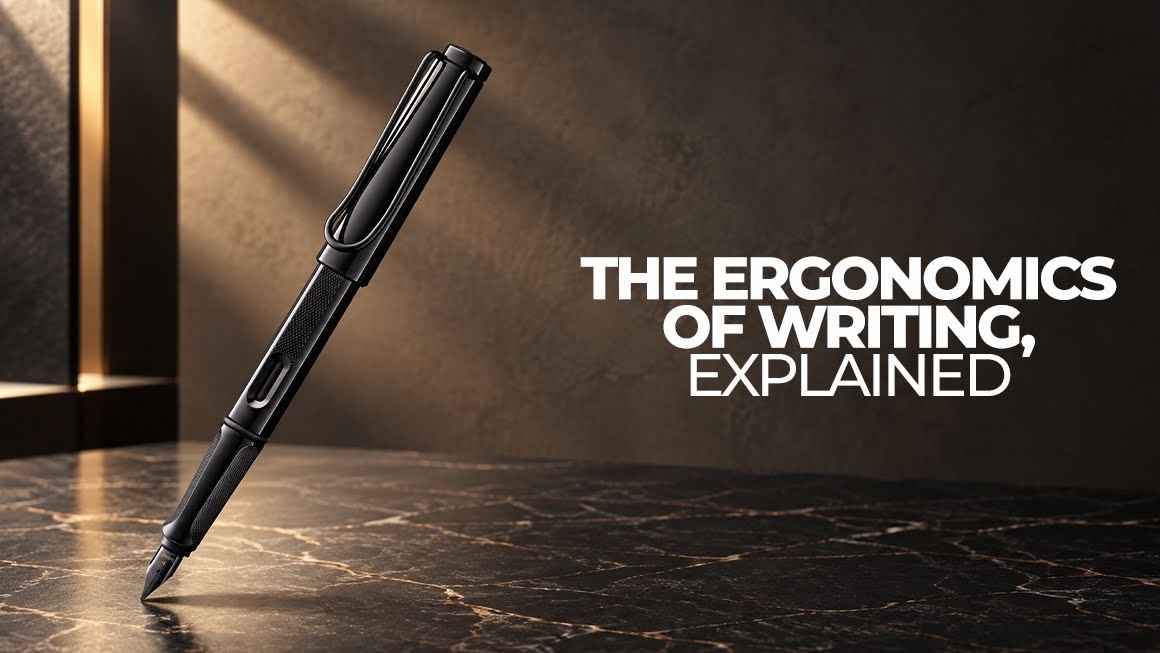
If you've ever finished a long writing session with a stiff hand and an aching wrist, you've probably blamed your posture, or the chair, or just the amount you were writing. Rarely does anyone blame the pen. But the pen is almost always part of the problem — and switching to a fountain pen is one of the most effective things you can do about it.
That's not a marketing claim. There's a straightforward mechanical reason for it, and once you understand it, the whole thing makes immediate sense.
A ballpoint pen uses thick, oil-based ink. To get that ink onto the page, you have to press down. The pen doesn't write unless you push it — which means your grip tightens, your forearm muscles engage, and that tension builds quietly across the whole writing session. By the end of an hour, your hand is genuinely tired, and most people don't even notice it's been happening until they put the pen down.
A fountain pen doesn't work this way at all. The ink is water-based and travels to the nib through capillary action — meaning it's drawn to the page rather than pushed onto it. You're not fighting the pen. You just move it, and it writes. That single difference in how the ink flows changes the entire physical experience of writing.

There's another factor that doesn't get talked about enough: writing angle. Fountain pens work best held at around 40 to 55 degrees to the page, which happens to be roughly where your hand and wrist settle when your arm is relaxed. Ballpoints, on the other hand, need to be held closer to upright — and that subtle difference in angle keeps your forearm muscles slightly engaged the entire time you're writing.
This is where grip design starts to matter. The Lamy Safari fountain pen has a moulded triangular grip that physically puts your fingers where they should be. It wasn't designed as a gimmick — it was built for students writing for hours at a time, and it does that job genuinely well. It's also one of the most consistently recommended best starter fountain pens for exactly this reason: it gets the ergonomics right from the start.

Something unexpected happens when most people switch to a fountain pen — their writing slows down slightly. Not dramatically, but noticeably. The nib responds better to a deliberate stroke than a rushed one, so you naturally settle into a calmer pace without really deciding to.
And here's what's interesting: that slower pace is actually more efficient for your hand. Less rushing means less grip tension. Less grip tension means less fatigue. People who make the switch usually find that they can write for significantly longer before their hand starts complaining, and their handwriting often improves as a side effect — not because they're trying harder, but because they're hurrying less.

If you're switching to a fountain pen specifically because your hand gets tired, a few things are worth paying attention to:
Nib width — a medium or broad nib flows more freely than a fine one, which means the ink reaches the page with even less pressure from you. If fatigue is the main concern, start with medium.
Weight and balance — a pen that's too heavy or too front-heavy puts more strain on your grip over time. Something balanced and mid-weight tends to work better for longer sessions than something very light or very heavy.
Grip section — textured or shaped grips reduce the urge to clench. The Lamy Safari handles this well, and so do Kanwrite fountain pens, which are built with extended writing sessions genuinely in mind.
The Sheaffer fountain pen range is also worth a look if you're starting out — the ink flow is smooth and consistent, which makes picking up the low-pressure writing habit faster and easier.
Once the basics feel natural, you start noticing what nib material actually does. Steel nibs are reliable and consistent — perfectly good for most people. But gold nib fountain pens — 14K or 18K — have a small amount of flex in them. They give slightly under pressure instead of resisting it, and they adjust to your hand over time. A lot of writers who've used both say there's a genuine difference in comfort during a long session, not just in feel.
The Montblanc fountain pen range and Hugo Boss fountain pens sit at the point where the engineering and the craftsmanship both matter. A well-made luxury fountain pen nib isn't just a prestige detail — the way it's ground and finished directly affects how the pen behaves on paper, and that has a real effect on how your hand feels at the end of an hour of writing.
If you're interested in lettering or more expressive handwriting, calligraphy fountain pens use stub or italic nibs that give each stroke natural line variation. They still work on the same low-pressure principle — the nib shape is different, but your hand gets the same relief.

Most people who switch to a fountain pen say the first two or three days feel slightly unfamiliar — the lighter touch, the different angle, the slower pace. Then by the end of the first week, picking up a ballpoint starts to feel oddly effortful. The adjustment is quicker than most people expect, and the difference in how your hand feels at the end of a day of writing tends to make it stick.
It's one of those things that's genuinely easier to feel than to explain — but the mechanical reason behind it is real, and it shows up fast.
Why does writing with a fountain pen feel less tiring than a ballpoint?
Fountain pen ink flows to the page by capillary action rather than pressure, so your hand doesn't need to push down to make it write — which means a much more relaxed grip over the course of a long writing session.
Is a fountain pen good for people with wrist or hand pain?
Many people with mild hand fatigue find fountain pens significantly easier to use, since they need far less pressure and encourage a more natural wrist angle — though if you have a specific injury, it's worth checking with a professional too.
What's the best starter fountain pen for reducing hand fatigue?
The Lamy Safari is the most consistently recommended starting point — ergonomic grip, smooth ink flow, and a medium nib that makes the low-pressure writing habit easy to pick up.
Do gold nibs really make a difference for comfort?
In practice, yes — gold nibs have a slight natural flex that lets them give a little under pressure rather than resist it, which many writers find noticeably more comfortable over longer sessions.
What's a calligraphy fountain pen and is it harder to use?
A calligraphy fountain pen uses a flat or angled nib that creates thicker downstrokes and thinner upstrokes — it takes a little practice, but it still writes on the same low-pressure principle as any other fountain pen.
Where can I buy genuine fountain pens in India?
William Penn has been an authorised stockist for Lamy, Sheaffer, Montblanc, Kanwrite, Hugo Boss, and more since 2002, with both online and physical stores across India.
William Penn
William Penn is a premium destination for fine writing instruments and curated lifestyle accessories. We blend timeless craftsmanship with modern elegance to celebrate the art of expression.

-e80f1a09-921a-4d02-81c9-de41a080a2e2.jpg)
-6d0a9f85-3ca0-4694-901e-81f34714ada7.jpg)


Stay up to date
Stay in the loop, with exclusive offers and product previews.
Featured Brands