Recommended
Show
Posted on September 29, 2026
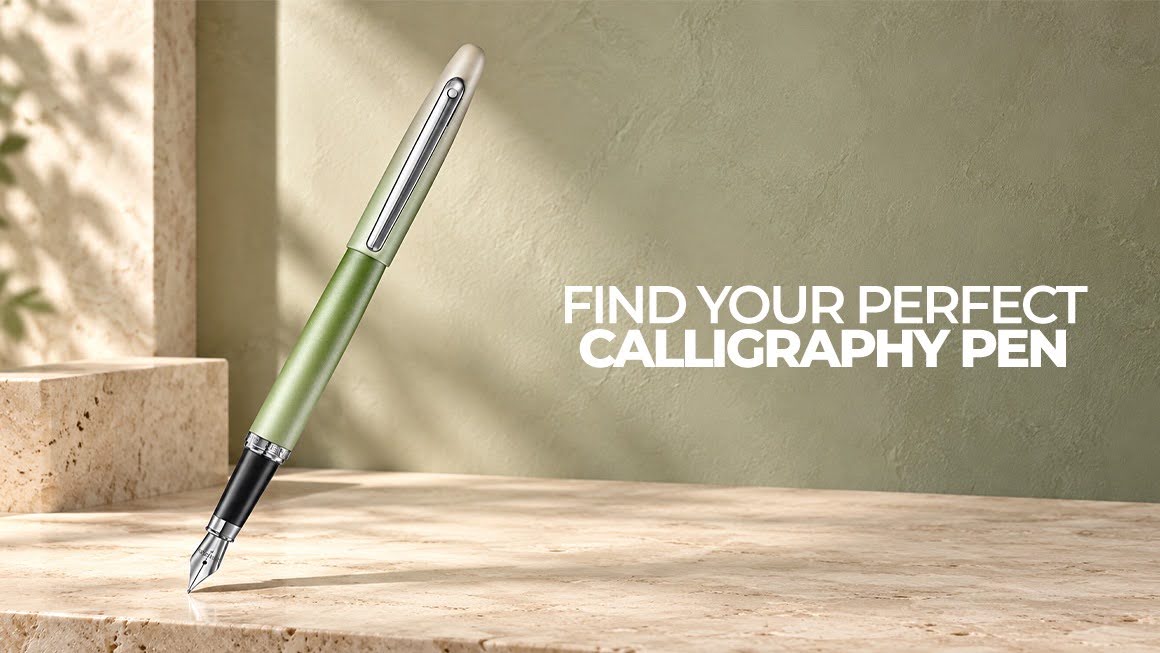
Most people's handwriting is just functional. It gets the job done, nobody looks twice at it, and that's fine. Calligraphy is the opposite of that. It's handwriting that slows down and makes something worth looking at — and the pen you use matters far more here than it does with any other kind of writing.
This guide covers the main types of calligraphy pens, what makes each one suitable for different stages of learning, and which ones are actually worth picking up if you're starting out or looking to go further.
At its core, a calligraphy pen is any pen built to produce line variation — thicker strokes in one direction, thinner ones in another. That contrast is the whole visual point of calligraphy. Different pen types get there in different ways, but the goal is always the same.
The main types are calligraphy fountain pens, dip pens, and brush pens. For most people starting out, a calligraphy fountain pen is the most practical first step. It has a self-contained ink supply, no separate ink pot needed, and enough control to start building actual technique without too much mess or fuss.

A calligraphy fountain pen works like a standard fountain pen with one important difference — the nib. Instead of a rounded tip, it has a flat, chisel-cut edge. That flat edge is what makes the thick-thin contrast happen. Write in one direction and you're using the full width of the nib. Shift direction and you're only using the edge. The variation happens naturally as you move — you don't have to consciously engineer it.
The Lamy Joy is the pen that comes up most often when people ask where to begin, and for good reason. It's built on the same frame as the Lamy Safari — ergonomic grip, light body, reliable ink flow — but with a square-cut italic nib instead of a regular one. It comes in three widths: 1.1mm, 1.5mm, and 1.9mm. Start with the 1.1mm. It's the most forgiving, and it still produces a clear calligraphic effect without feeling like too much to control. The 1.9mm is for when you've got some hours of practice behind you and want a bolder, more dramatic stroke. It runs on standard Lamy T10 cartridges, or a converter if you'd rather use bottled ink.
The Kaweco Calligraphy Set is worth a look if you want to experiment with multiple widths without buying separate pens. The set comes with interchangeable calligraphy nibs in four sizes — 1.1mm, 1.5mm, 1.9mm, and 2.3mm — all fitting the same Kaweco Sport body. It's a genuinely practical setup for anyone who wants to try different line weights and see what suits them.

Sheaffer has been making calligraphy kits for a long time, and they're often the first recommendation for a complete beginner. The Sheaffer Calligraphy Maxi Kit includes three pens in different sizes, ink cartridges, and a practice guide. You're not just getting a pen — you're getting enough to actually learn with, without having to separately source everything you need.
The pens are easy to use, the ink flow is consistent, and the kit format means you can try different nib widths from day one. If you're buying a first calligraphy set — for yourself or as a gift — this covers the bases. Browse the Sheaffer range at William Penn here.

Once you've spent real time with a calligraphy fountain pen and built some consistency in your letterforms, a few things open up.
Dip pens give you much wider nib choice — there are dozens of nib types and shapes, each suited to a different script or style. The line quality also tends to be sharper and more varied than a fountain pen nib can manage, which is why professional calligraphers often keep a dip pen for finished work even when they use fountain pens for practice.
Flex nibs are a different direction entirely. A flex nib spreads when you apply pressure, creating a wide downstroke, and snaps back for the thin upstroke. The effect is close to what you see in traditional copperplate lettering. It asks more of you technically — you need good ink flow and a light, controlled hand — but the results are difficult to replicate with a standard nib.
Both are available across the fountain pen collection at William Penn, with Lamy, Kaweco, and Sailor covering different parts of the range.

If you genuinely don't know, go with 1.1mm or 1.5mm. Wide enough to show the calligraphic effect clearly, controlled enough to write with while you're still figuring out pen angle and letterform. The wider sizes — 1.9mm and 2.3mm — amplify everything, including mistakes. They're better once you've got the basics down.
One thing worth knowing: nib width in calligraphy pens doesn't work the same way as in regular fountain pens. A 1.1mm calligraphy nib covers more paper than a 1.1mm regular nib, because the flat edge sits differently on the page. If you're coming from fountain pens, expect the line to feel bigger than the number suggests.
Most calligraphy fountain pens — Lamy Joy and Kaweco included — run on standard fountain pen cartridges or converters. If you want to use bottled ink, which opens up a much wider colour range, you'll just need a compatible converter. William Penn stocks a range of inks and refills here, including options that work well for calligraphy.
One thing to watch: pigmented inks and India inks are generally not suitable for fountain pens. They can clog the feed. Stick with water-based fountain pen inks unless your pen is specifically designed to take something else.
What is the best calligraphy pen for a beginner?
The Lamy Joy calligraphy fountain pen is one of the most consistently recommended starting points — easy to use, available in three nib widths, and produces clear results without needing much prior experience.
What's the difference between a calligraphy fountain pen and a regular fountain pen?
A calligraphy fountain pen has a flat, chisel-cut nib instead of a rounded one, which is what creates the thick-thin line variation — a standard fountain pen nib writes at a consistent width regardless of direction.
Can I use any ink in a calligraphy fountain pen?
Most are designed for standard water-based fountain pen inks; pigmented inks and India inks can clog the feed, so it's worth checking before you use anything beyond standard cartridges.
Which nib width should a beginner choose?
Start with 1.1mm or 1.5mm — wide enough to show the calligraphy effect, controlled enough to write with while your technique is still developing.
Is calligraphy hard to learn?
The basics — right pen angle, understanding how the nib works — can be picked up in a few sessions. Consistent letterforms and spacing take longer, but it's the kind of skill that builds steadily with practice, not all at once.
William Penn has been stocking authentic writing instruments in India since 2002, and the calligraphy range covers everything from first kits to more serious setups for artists and professionals. Every pen is genuine brand stock, and our team — across both the website and physical stores — can help you figure out where to start.
Browse the full calligraphy pen collection at William Penn.
William Penn
William Penn is a premium destination for fine writing instruments and curated lifestyle accessories. We blend timeless craftsmanship with modern elegance to celebrate the art of expression.

-e80f1a09-921a-4d02-81c9-de41a080a2e2.jpg)
-6d0a9f85-3ca0-4694-901e-81f34714ada7.jpg)


Stay up to date
Stay in the loop, with exclusive offers and product previews.
Featured Brands